
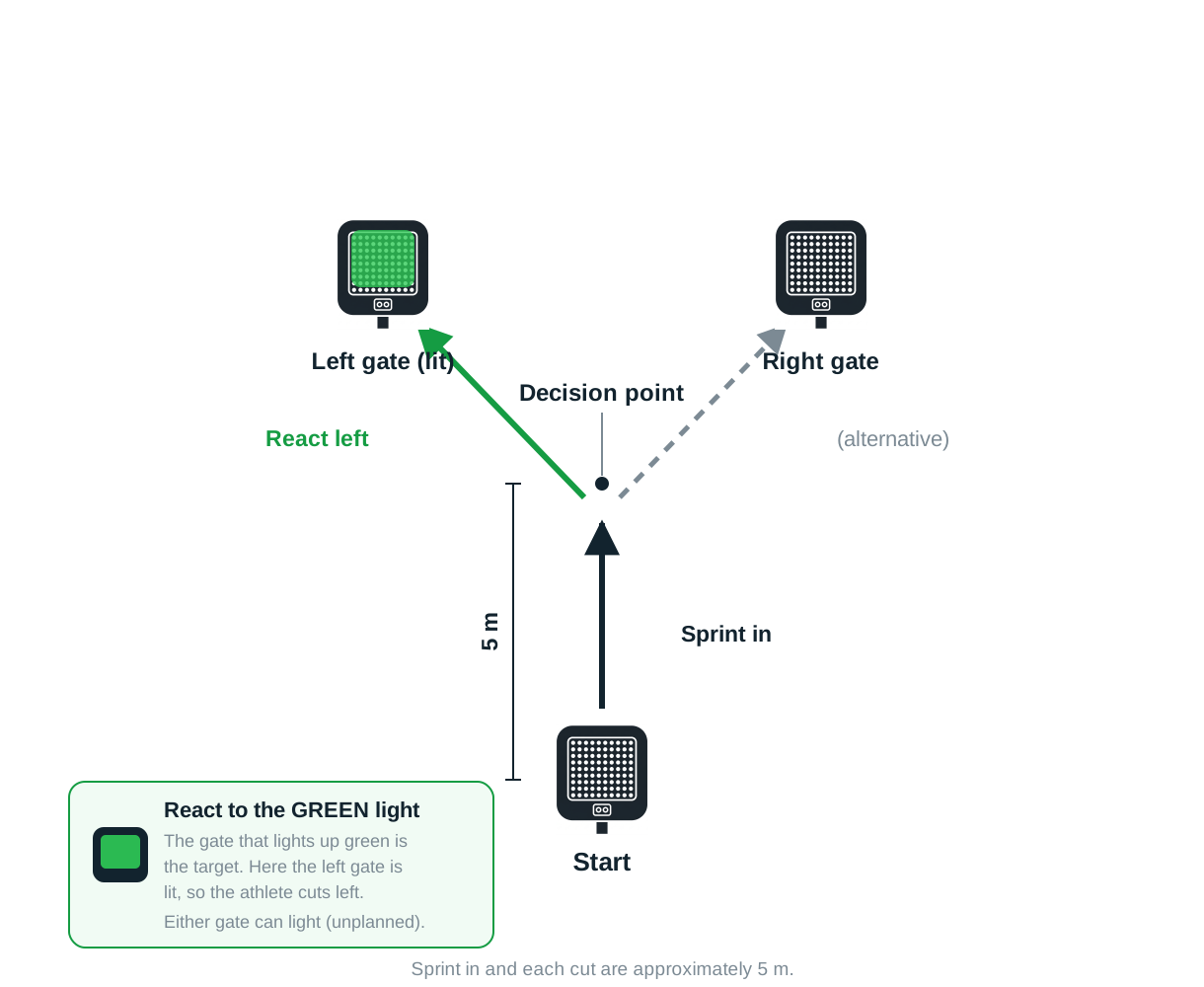
Position: Set up the start gate at the base of the Y. Place two exit gates roughly 5m ahead, angled about 45 degrees to the left and right so they form the two arms of the Y. The athlete starts at the start gate facing forward, toward the decision point.
Cue: "Sprint forward on go. As you approach the decision point, react to the signal and cut to the gate that lights up. Sprint through the correct gate as fast as you can. Don't anticipate, wait for the signal and react.
Procedure:
Step 1 – Set up three gates in a Y: one start gate at the base, and two exit gates about 5m ahead, angled roughly 45 degrees to the left and right.
Step 2 – In the AxIT Timing Gate app, create or select the athlete/team and choose the Reactive Agility drill type. Configure the left/right stimulus for the Y drill following the app prompts.
Step 3 – Choose trigger type then click next:
-
Standard – timing starts when the athlete crosses the start gate.
-
In-Beam – timing starts when the athlete is already in position at the start gate. Gate will display red light when activated.
Step 4 – Ensure all gates are powered on, then scan and connect them in the app following the prompts, and confirm their positions (start, left, right). Use the Flash function if needed to identify each gate.
Step 5 – Tap Start Trial in the app. Position the athlete at the start gate, facing forward.
Step 6 – On go, the athlete sprints forward. The system delivers the stimulus, the target exit gate lights up on its LED display, and the athlete reacts and cuts to the indicated gate. Timing stops when they cross the correct exit gate. The app records total time, and reaction or decision time where available.
Step 7 – After the trial:
-
Tap Save Trial to store the result.
-
Tap Redo if you want to retest without saving.
Step 8 – Review results in the app. Use the Leaderboard icon to compare trials, compare left and right cuts, or switch between athletes.
Using the Y Reactive Agility Drill in rehab and performance:
The value of this drill is that it adds a reactive, decision-making demand that planned tests miss. In sport, cutting is rarely pre-planned, so an athlete who looks sharp in a 505 or Box Drill may still be slow or hesitant when they have to read a stimulus and react. Comparing an athlete's reactive time against a planned change of direction time gives an indication of the decision-making cost, and a large gap suggests perception and reaction, rather than movement ability, is the limiter.
In a return to sport setting, reactive testing is useful late in the process to expose hesitancy, guarding or asymmetry that only appears under unplanned demand. An athlete may move confidently in pre-planned drills yet protect a limb when forced to react, so this drill can help confirm readiness for the chaotic demands of competition. Randomise the stimulus, run multiple trials to each side, and interpret the results alongside the rest of your assessment rather than in isolation.